Myofascia, Hydration, and Pain
Precision Matters
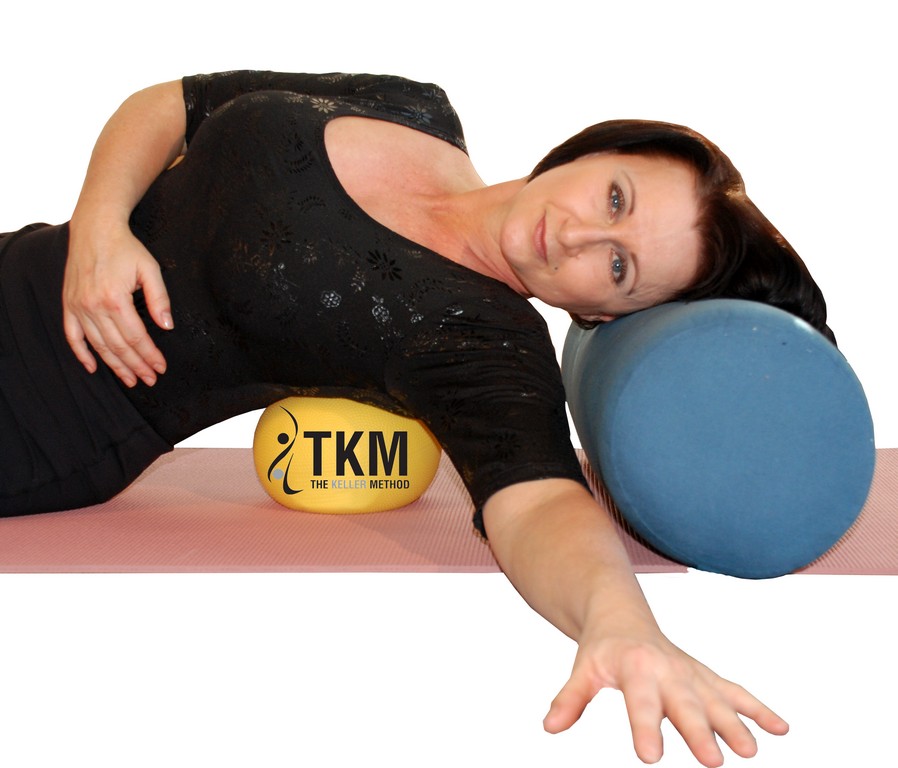
Foam rollers are broad, bulky, and often too hard. As a result, they cannot reach the smaller, intricate layers of myofascia the way a myo-ball can. At best, rollers increase surface circulation, but they primarily create compression instead of shear and separation between layers.
In contrast, myo-balls compress and yield to body weight, allowing them to engage deeper layers and locate subtle restrictions. This targeted input creates more meaningful change. Myofascia connects throughout the body in eleven distinct lines of pull, which means when you influence one area, the entire system responds. This intelligent network thrives on precise input.
Grip Creates Shear
Myo-balls provide grip, especially when used on bare skin. That grip allows you to create true shear and glide between myofascial layers rather than simply compressing them.
When you apply pressure and then subtly move the body, you separate bound fibers instead of flattening them. This separation restores glide between layers and allows fresh fluid to enter the myofascial matrix at the cellular level, where it is needed most.
Without shear, hydration remains superficial. With shear, tissue begins to reorganize and get healthy.
Perfect. Let’s keep going.
Pliability Protects
Myo-balls yield under pressure, which protects bony prominences and reduces the risk of nerve irritation. Instead of bracing against a hard surface, tissue can soften gradually.
A harder tool does not produce deeper results. In fact, excessive discomfort often triggers guarding, micro-tearing, inflammation, and protective tension. Once the nervous system shifts into defense mode, meaningful and lasting release becomes very limited.
When the tool meets the tissue with responsiveness rather than force, the body allows change.
Customization Changes Everything
Myo-balls come in a wide range of sizes and densities, which allows you to adjust pressure the way a skilled therapist adjusts their touch. That variability makes all the difference.
Depending on the body part, I use balls ranging from 3” to 8”. For more sensitive regions such as the cervical spine, SI joint, pelvic floor (external), or for deep spinal mobilization, I select softer, more therapeutic balls.
Myofascia often responds well to texture. Soft, nubbled balls can provide valuable sensory input without overwhelming the tissue, although not every body part benefits from texture. I frequently use air-filled balls that allow pressure adjustments with a portable needle-nose pump, as well as high-quality rubber balls that gradually soften over time.
When you can customize density, size, and pressure, you move from generic rolling to intelligent input.
Here are links to the main myo-balls I use:
Air-Filled Myofascial Balls
These have soft nubbled surfaces that provide excellent sensory input without excessive intensity. They require a small needle-nose pump for inflation. https://incrediball.ca/product/mfb-myofascial-balls/
Rubber balls: These gradually soften with use and are very effective once broken in. However, they are too aggressive for certain body parts or sensitive tissues. https://www.tuneupfitness.com/shop/massage-ball-kits/roll-model-starter-kit
ChiBall: This is my favorite soft, air-filled ball. It inflates like a balloon and works beautifully for more delicate regions. https://chiballcanada.com/
The Bottom Line
Myo-balls allow true customization. They travel easily, offer nuance, and create depth. In contrast, foam rollers provide broad compression but simply cannot deliver precise glide and shear between deeper layers.
Myofascia thrives on movement, hydration, and intelligent input. Therefore, when you work with intention and proper technique, precision consistently outperforms force.
Go slowly. Stay in each position for three to five breaths. Myofascia requires time to respond.
When you work with the nervous system instead of against it, tissue softens. Range of motion improves as the myofascial matrix becomes healthier. Over time, pain decreases and resilience builds.