The “Superficial Front Arm Line” in Clinical Practice
Anterior Myofascial Continuity from the Rib Cage to the Hands
Healthcare professionals spend much of the workday positioned in front of the body. Treating a patient, performing procedures, and charting all require the arms to reach forward while the eyes focus closely on a task. Over time, this forward orientation loads the anterior myofascial arm lines for hours at a time.
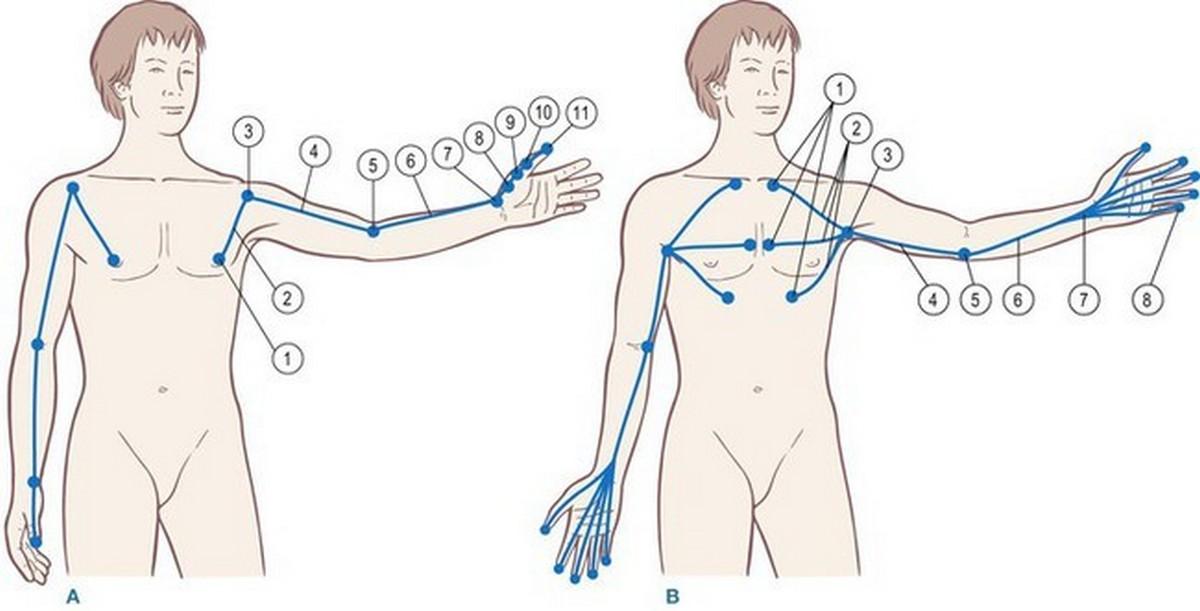
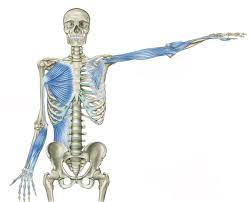
From a myofascial perspective, anterior arm lines originate in the chest and travel into the hand. These lines function as integrated force-transmitting systems that link the rib cage, shoulder complex, forearm, and fingers into one continuous myofascial chain.
When clinical work repeatedly loads the system in a forward orientation, these anterior pathways adapt to that demand. Forward work itself is not the problem. The issue arises when thoracic rotation and extension fail to counterbalance sustained thoracic flexion and internal rotation of the arms.
Over time, available thoracic movement decreases and load distribution shifts. As thoracic mobility diminishes, the lumbar spine often absorbs the additional load.
Understanding how the anterior myofascial arm lines—especially the Superficial Front Arm Line—influence thoracic mobility helps explain why restriction in the chest and shoulders often appears as strain in the lower back.
Movement Restores Myofascial Health
Myofascia responds best to movement, variability, and coordinated load. Static stretching rarely restores adaptability because it does not reintegrate an entire myofascial line.
For clinicians who spend much of the day working in front of the body, restoring thoracic rotation is especially important. When the rib cage regains the ability to rotate, load redistributes more evenly through the spine and the lower back no longer needs to compensate.
Thoracic Rotation Exercise
The following video demonstrates a simple thoracic rotation exercise that helps reopen movement through the rib cage and anterior arm line.
the rib cage and anterior arm line.
Watch the basic movement here: https://youtu.be/MzV0vEtvh_4
Note: This short video demonstrates the general movement only. Additional technique are outlined below.
Important myofascial cues not covered in the video:
- Think about the entire SFAL participating in the movement
- As you rotate, reach out actively through the arm, hand, and thumb
- Inhale into the rotation it’s easier for the spine
- For anyone very mobile in the shoulder joint, don’t allow the arm to simply drop to floor. Keep the arm in-line with the chest.
- At end range of the opening, you can add small pulses or gentle oscillations
- Vary the line of pull – with each repetition, change the arm position when in the rotation
- KEY: keep knees stacked and hips facing forward – the thoracic spine starts ABOVE your belly button
Protect Your Low Back by Opening Your Chest
For healthcare professionals who spend much of the day working in front of the body, maintaining thoracic rotation is essential.
When the rib cage moves well, the spine shares load more efficiently and the lower back doesn’t need to compensate.
Keeping the Superficial Front Arm Line open—from chest to hand—helps support healthier movement through the entire upper body.
Continue Exploring
If thoracic extension is also limited:
Why Your Spine Gets Stuck in Flexion https://kellermethodvitality.com/blog/dont-let-your-spine-think-its-stuck-in-flexion/
Next in this series:
The Deep Front Arm Line — The Importance of the Thumb Connection